
Electrolysis: Permanent Hair Removal, Explained
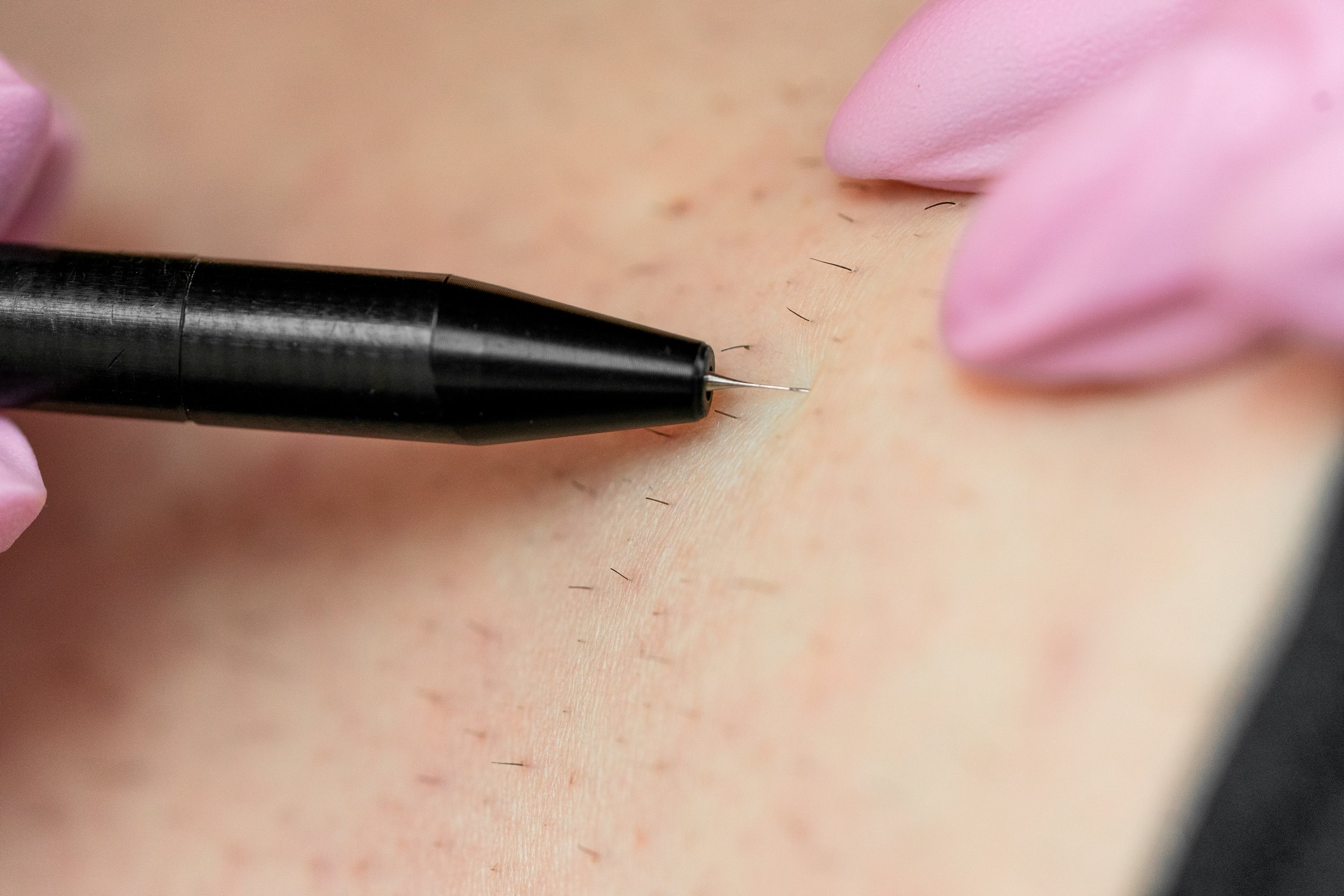
Electrolysis is the only FDA-approved method of permanent hair removal. Originally developed to treat ingrown eyelashes, the technology has evolved into the most precise and reliable way to permanently disable hair follicles.
Electrolysis works by delivering a controlled electrical current directly into the hair follicle. This damages the follicle and separates it from the capillaries that supply it, permanently preventing future hair growth. Once a follicle has been successfully treated, it cannot produce hair again.
How Electrolysis Works
During treatment, a fine probe—matched to the width of your individual hair—is inserted into the follicle. A small electrical current is delivered, and the hair is removed with tweezers. This process is repeated hair by hair for the duration of the session.
Most clients experience minimal discomfort. Sensations may include warmth or a brief pinch. Topical anesthetics can be used if needed.
Appointments are scheduled in 15-, 30-, and 60-minute increments. Your electrologist uses a timer to ensure you receive your full scheduled treatment time. Late arrivals are treated for the remaining session time, with the full appointment fee still applying.
Electrolysis vs. Laser Hair Removal
Laser hair removal is often misunderstood as permanent hair removal. In reality, laser is classified as permanent hair reduction, not removal.
Laser can be an effective option for many clients, but it typically does not eliminate all hair permanently. Many people require ongoing maintenance or a secondary method after completing laser treatments.
Electrolysis permanently removes hair by treating each follicle individually. It can be performed on its own or alongside laser, including after laser treatments have been completed. Understanding the difference between reduction and removal is essential when planning long-term results.
Treatment Timeline & Expectations
Electrolysis requires consistency and patience. Most areas of the body require 12–18 months of treatment for optimal results.
Appointments are typically scheduled weekly during the initial phase, then adjusted over time based on progress, hair growth cycles, and treatment area size. Because hair grows in three stages—and only a small percentage of hair is actively growing at any given time—multiple sessions are necessary to permanently treat all follicles.
The total number of sessions varies depending on:
appointment consistency
home care compliance
hormonal influences
hair density and texture
Progress is gradual and cumulative.
What to Expect After Treatment
Following an electrolysis session, the treated area may or may not be completely hair-free. Results depend on the length of the appointment, the size of the area, and the amount of hair present.
Some hairs—particularly coarse or deeply rooted ones—require additional time per insertion. Your electrologist will guide session spacing and treatment strategy based on ongoing progress.
Temporary redness or irritation is normal. Most clients resume normal activities immediately.
Who Is Electrolysis For?
Electrolysis is effective on all skin tones and all hair colors. Unlike laser, it does not rely on contrast between hair and skin.
Anyone with unwanted hair may be a candidate, including individuals with hirsutism and those seeking gender-affirming care. Electrolysis can be performed on nearly any area of the body, except areas that retain moisture, such as inside the nose or inner labia.
Ideal candidates understand that electrolysis requires:
regular scheduling
commitment to the process
proper home care and skin support
Safety & Professional Standards
Electrolysis is not regulated in the state of Georgia, making practitioner training and standards especially important.
At The Dreamhouse, electrolysis is performed by professionally licensed estheticians and cosmetologists who have completed Silhouet-Tone’s intensive training program. We maintain strict standards of hygiene, technique, and client care, including the exclusive use of disposable probes to eliminate cross-contamination.
Electrolysis is considered very safe. In some cases, a physician’s note may be required. Electrolysis is not recommended during pregnancy or lactation, and certain medical conditions may require additional precautions. Your safety is always prioritized.
Aftercare & Skin Support
After treatment, care for the area as you would a mild sunburn:
apply soothing products such as aloe
wear loose, clean clothing
use sunscreen once the skin has settled
Hydration is essential. Drink plenty of water to support skin healing.
Avoid sweating, makeup, and friction while the skin feels irritated. Do not pick the skin. Electrolysis cannot be performed on broken skin.
Sugaring and waxing are not recommended during the course of treatment. Shaving or trimming is permitted between sessions, provided hair is allowed to grow for several days before your next appointment.
Why This Matters
Permanent hair removal depends on technique, consistency, and skin support. Electrolysis delivers results when performed correctly and approached with patience and precision.